
עם ישראל חי
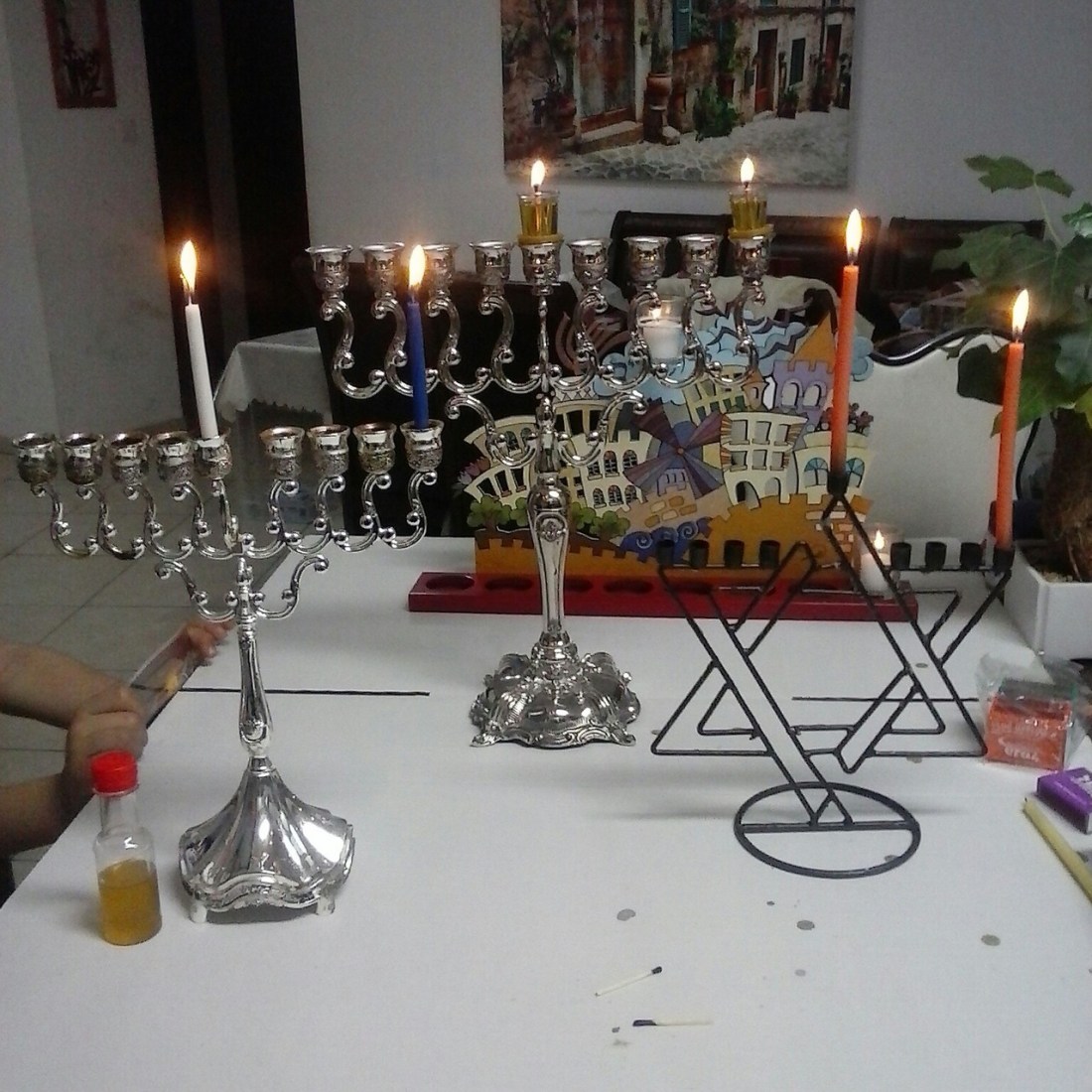
the first night of Hannukah!
G-D I LOVE this holiday 💞🕎💗🕎💝
finished hanging the decorations! (my father & sister are talking in the background…)
gonna hung the decorations IY”H tomorrow!
I know I shouldn’t be THAT hungry considering that there was a two-day long holiday + shabbos just yesterday but this fast makes me feel like I haven’t eaten in forever
On this thursday is Rosh Hashanna:
– this is the jewish new year, we are entering the year 5778. It comemorates when adam and eve were created.
– If you see someone jewish, or have jewish friends and family, say “L’Shana Tova (Le-Sha-Nah-Toe-Vah). It’s a greeting and a wish for a happy new year!
– We dip apples in honey to remind us of the sweetness of life and to bring sweetness into ourselves for a new year
-We eat a circular challah to symbolize the cycles of time, the challah often has raisins in it to add extra sweetness
-This is a happy holiday, full of joy
Beginning on Friday, September 30th is Yom Kippur:
– This is the jewish day of atonement, when we think about our wrongdoings of the past year and think about how we can commit to doing better in the next year.
– Many Jewish people fast, abstaining from food and water from sundown to sundown. The fast is roughly 25 hours. HOWEVER, if you need to eat, you may. There are lots of reasons that people may not fast, like recovering from an eating disorder, a medical condition like diabetes, or having to take medication with food. The elderly, children, and pregnant people should not fast.
– This is a solemn holiday, many people spend all day in synagogue in deep prayer.
– On Yom Kippur, wish someone a peaceful or meaningful fast. Some people may take offense to the concept of having an “easy” or “enjoyable” fast because Yom Kippur is not about ease or comfort.
– There is a breaking of the fast at sundown, this is usually a joyous event
Together, these make up the High Holy Days, the most important week in Judaism.
please reblog to educate and spread awareness
not entirely accurate but the best info post about it i saw yet
you: a goyische normie, thinks it’s 2017
me: jewish, smart, knows it’s 5777
You can’t drive away the darkness with sticks or weapons. The only way is to light a candle and the darkness will disappear by itself. Our candle is the Torah.
People mistakenly believe that peace in the world means that everyone will share common viewpoints and think the same way. So when they see scholars disagreeing about an issue, this appears to be the exact opposite of peace. True peace, however, comes precisely through the proliferation of divergent views. When all of the various angles and sides of an issue are exposed, and we are able to clarify how each one has its place — that is true peace. The Hebrew word shalom means both ‘peace’ and ‘completeness.’ We will only attain complete knowledge when we are able to accommodate all views — even those that appear contradictory – as partial perceptions of the whole truth. Like an interlocking puzzle, together they present a complete picture.
 Naama's blog